By Himalaya Krishi Team
If you are searching for the Murrah buffalo price in Nepal for 2025 or 2026, this guide gives you the most accurate price ranges available broken down by age, milk yield, sex, and region. Whether you are buying your first animal for a small dairy or scaling a commercial farm, this article will help you understand what a Murrah buffalo should cost and what to look for before you pay.
The Murrah (also spelled Mura or Murra) is the world’s highest milk-producing buffalo breed. It originates from the Rohtak and Hisar districts of Haryana, India, and has been widely imported into Nepal for commercial dairy farming over the past two decades.
Quick breed facts
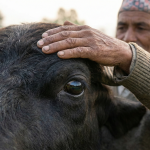
Murrah buffaloes are recognised by their tightly curled horns, jet-black coat, and bulky, compact body. They are prized in Nepal because they produce 8–15 litres of milk per day far more than most local Nepali buffalo breeds such as Parkote or Lime buffalo.
In Nepal, Murrah buffaloes are farmed primarily in the Terai region (Chitwan, Bara, Nawalpur, Rupandehi) and increasingly in the Hilly districts where farmers seek a more profitable alternative to local breeds. The Government of Nepal has also promoted Murrah imports as part of its dairy development programme.
The table below shows current Murrah buffalo prices in Nepal as of early 2026. These figures are based on market rates observed in Chitwan, Nawalpur, and Bara districts, as well as direct farm-sale prices from Himalaya Krishi.
| Category | Price range (NPR) | Daily milk yield | Demand level |
|---|---|---|---|
| Heifer (1–2 yrs, not yet calved) | 80,000 – 1,20,000 | Not yet in production | Moderate |
| Young female (first lactation) | 1,20,000 – 1,60,000 | 6–10 litres/day | High |
| Peak-lactation female (2nd–3rd lactation) | 1,60,000 – 2,20,000 | 10–15 litres/day | Very high |
| High-yielding proven female (15+ litres) | 2,00,000 – 2,50,000+ | 15–18 litres/day | Premium |
| Male calf (0–6 months) | 20,000 – 40,000 | N/A | Low |
| Breeding bull | 1,00,000 – 2,00,000 | N/A | Moderate |
| Dry (non-lactating) female | 70,000 – 1,10,000 | 0 (dry period) | Low |
Prices fluctuate. Murrah buffalo prices in Nepal change with season, fodder costs, and import volumes from India. The figures above are indicative of early 2026. Always verify current rates directly with the seller before purchase.
Female Murrah buffaloes command the highest prices because they generate direct milk income. The single most important factor affecting price is documented milk yield. An animal that yields 15 litres per day is worth significantly more than one yielding 8 litres, even if both are the same age.
Always ask the seller for a milk yield record for at least 7 consecutive days. Reputable farms like Himalaya Krishi provide this automatically. If a seller cannot produce records, negotiate accordingly or walk away.
Male Murrah calves have limited commercial value in Nepal beyond breeding use. Unregistered males are typically sold for meat. A certified pedigree breeding bull with known parentage from high-yielding dams is the exception these can fetch NPR 1,50,000–2,00,000 from farmers wanting to improve their herd genetically.
| Region / District | Typical price range (peak-lactation female) | Notes |
|---|---|---|
| Chitwan (Bharatpur) | 1,60,000 – 2,20,000 | Largest buffalo market; most choice |
| Bara / Parsa (Terai) | 1,50,000 – 2,00,000 | Close to Indian border; import routes |
| Nawalpur / Rupandehi | 1,60,000 – 2,10,000 | Growing commercial dairy zone |
| Kathmandu Valley | 1,80,000 – 2,50,000 | Higher due to transport & urban demand |
| Pokhara / Gandaki | 1,70,000 – 2,30,000 | Limited supply; prices elevated |
Buying directly from a Terai-based farm like Himalaya Krishi and arranging your own transport is often the most cost-effective route for buyers in Kathmandu or Pokhara.
Understanding the economics helps you decide whether a higher-priced animal is worth the investment. Here is a simple monthly income estimate for a Murrah buffalo in Nepal:
10–15L
Daily milk yield (peak lactation)
NPR 90–110
Milk price per litre (2026)
NPR 27,000–49,500
Gross monthly income (1 animal)
8–10 months
Typical lactation length
A peak-lactation Murrah buffalo purchased for NPR 2,00,000 can recover its full purchase cost within 6–8 months of milk income alone — making it one of the fastest-returning livestock investments available to Nepali farmers.
Several factors push the price of a Murrah buffalo up or down in Nepal’s market:
Milk yield record — The single biggest price driver. A documented daily yield of 15+ litres commands a 30–50% premium over an undocumented animal of the same age.
Lactation stage — Animals in peak lactation (2–4 months after calving) are priced highest. Dry animals or those in late lactation are priced lower but may suit buyers willing to wait.
Age and parity — Second and third lactation animals are considered prime. Animals beyond the fifth lactation decline in yield and are priced accordingly.
Health and vaccination status — Vaccinated animals with health certificates from a licensed veterinarian command better prices and give buyers important legal protection.
Breed purity — Pure Murrah animals (identifiable by tightly coiled horns, black coat, and breed characteristics) are priced above cross-bred or mixed animals. Ask for a pedigree certificate if available.
Seasonal demand — Prices typically rise before Dashain and Tihar festivals when demand for fresh buffalo milk peaks, and soften in winter when milk consumption slows.
Whether you are buying from a private seller or a farm, use this checklist before finalising any Murrah buffalo purchase in Nepal:
Himalaya Krishi offers certified, vaccinated Murrah buffaloes with full milk yield documentation. We serve buyers across all of Nepal’s Terai and Hill districts.
What is the price of one Murrah buffalo in Nepal?
A Murrah buffalo in Nepal typically costs between NPR 80,000 and NPR 2,50,000 depending on age, sex, milk yield, and health. High-yielding females in peak lactation can cost NPR 1,80,000–2,50,000. Young heifers (1–2 years) start from NPR 80,000–1,20,000.
1.What is the price of Murrah buffalo milk in Nepal?
Buffalo milk in Nepal is priced between NPR 80–110 per litre depending on fat content and season. Murrah buffalo milk with 7–8% fat commands a premium in urban markets.
2.How much milk does a Murrah buffalo give per day?
A well-fed Murrah buffalo yields 8–15 litres of milk per day during peak lactation. Under optimal feeding and management, some animals exceed 15 litres per day.
3.Is Murrah buffalo farming profitable in Nepal?
Yes. With milk priced at NPR 90–110 per litre and a Murrah giving 10–15 litres daily, a farmer can earn NPR 27,000–49,500 per month per animal before feed and care costs, making it one of the most profitable livestock enterprises in Nepal.
4.Where can I buy a Murrah buffalo in Nepal?
Murrah buffaloes can be purchased from certified livestock farms like Himalaya Krishi, government livestock markets in Chitwan, Nawalpur, and Bara districts, or through the Department of Livestock Services Nepal.
5.What is the Murrah buffalo price in India 2025 or 2026?
In India, Murrah buffalo prices in 2025–2026 range from approximately INR 60,000–1,80,000 depending on yield and age. At current exchange rates, this is roughly NPR 96,000–2,88,000. Importing from India involves transport costs, veterinary clearance, and import procedures that add 15–25% to the base price.
Himalaya Krishi Editorial Team
The Himalaya Krishi team combines hands-on livestock farming experience with agricultural research to produce practical, accurate guides for Nepali farmers. Our price data is verified against current market rates and updated twice yearly.
Aeroponics: The Future of Sustainable & High-Yield Farming – Himalaya Krishi