Why Every Tech Professional Should Enter Farming — Branding, Marketing & Local SEO for Explosive Growth

Most tech professionals are chasing the next big thing in Silicon Valley, London, or Bengaluru. We hustle for promotions, build complex software, and dream of unicorn startups. But what if the biggest untapped industry isn’t in a skyscraper but in a field? What if the next revolution isn’t coded in Python but grown in the soil? I’m here to tell you it is. Agriculture is a sector full of opportunity, waiting for a tech-driven mindset to unlock its explosive growth.

My journey from a tech background into farming wasn’t about escaping the digital world; it was about applying its principles to a sector I was born into. I saw my peers chasing jobs abroad, what I call “tech slavery,” while a goldmine of opportunity was right here at home. Agriculture in many places, including my home in Nepal, is raw and unoptimized. It lacks branding, proper documentation, and the digital tools that are second nature to us.

This is not just a story about farming. It’s a guide for every tech professional who feels a pull toward creating something real, tangible, and deeply meaningful. It’s about how you can use your skills in branding, digital marketing, and local SEO to build a thriving agriculture business that offers more freedom and fulfillment than any corporate job ever could.

My Journey: Choosing Roots Over Ranks

I was rooted in agriculture from birth, but my mind was trained in technology. I could have followed the path of many, seeking a comfortable tech job overseas. Instead, I saw a massive gap right in front of me. The agricultural sector was untouched by the digital transformation that has reshaped every other industry. There was no modern branding, no banking support, no organized documentation, and zero optimization.

I decided to merge my two worlds. I started applying my tech brain to the family farm. I built our systems using tools I knew:

  • WordPress for our website and content management system (CMS).
  • Google Maps for local visibility.
  • Digital Documentation for everything from finances to animal health.
  • Pedigree Management Systems to track our Murrah buffalo lineage.
  • Custom Billing Software to streamline sales.

This fusion of tech and tradition wasn’t just an experiment; it was a business strategy. And it’s a strategy you can replicate.

Building a Brand, Not Just a Farm: The Soul of Your Business

In agriculture, your product isn’t just milk or vegetables; it’s trust. The first step is to build a brand that tells a story and connects with people on an emotional level. Generic is forgettable. Authentic is magnetic.

My Branding Story: Meaning in Every Detail

Our brand name, Himalaya Grenary Farms, was not chosen randomly. Every word carries a piece of our identity:

  • Himalaya: Represents nature, purity, and our deep connection to our roots.
  • Farms: Signifies agriculture, the core of what we do.
  • Grenary: A creative spelling of “greenery,” symbolizing health, wellness, and organic living.
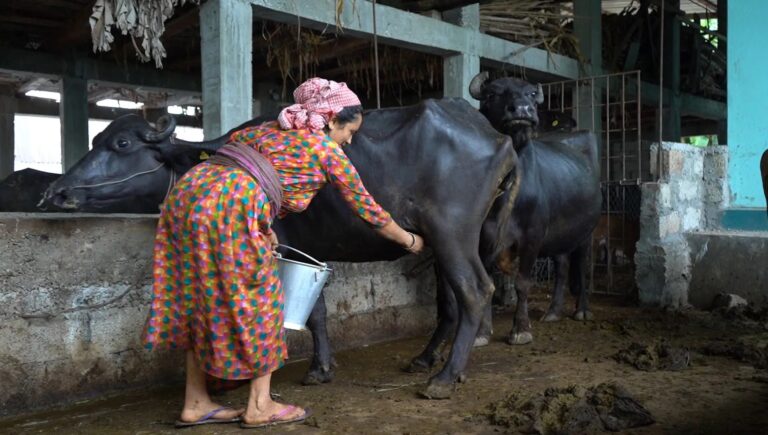
  • Black: This is a key part of our identity. It represents the majestic black Murrah buffalo, the heart of our dairy operation. It’s a bold choice that makes us memorable.

Your brand story is your most powerful asset. Don’t just sell a product; sell your values, your mission, and the meaning behind your work.

The Social Media Blueprint for Farm Digital Marketing

Authenticity is the currency of social media. People don’t want to see polished ads; they want to see real life. We use a multi-platform strategy to build our community and drive sales.

  • Show the Real Moments: Your content should be a window into your world. We showcase everything: the early mornings, the daily struggles, the victories and failures, the animals, and the people behind the scenes. When customers see your honesty, they feel a powerful connection.
  • A Platform for Every Goal:
    • TikTok: Perfect for viral reach. Short, engaging clips of daily farm life can introduce your brand to a massive new audience.
    • Instagram: Your branding hub. Use high-quality photos, stories, and Reels to build a beautiful visual narrative for your farm.
    • Facebook: The engine for local sales. We use it to connect with our local community, promote events, and run targeted ads.
    • YouTube: The foundation for trust. Long-form videos like farm tours, “how-to” guides, and deep dives into our practices build authority and long-term loyalty.

Local SEO: The Untapped Goldmine for Farmers

Here is where your tech background gives you an unfair advantage. Most farmers aren’t thinking about search engine optimization. But people in your community are searching online for fresh, local products every single day. The demand for organic and authentic food is sky-high.

Think about the search queries:

  • “Organic milk near me”
  • “Fresh vegetables Hetauda”
  • “Farm-to-table delivery in Nepal”
  • “Murrah buffalo ghee online”

By optimizing for local SEO, especially on Google Maps, you put your farm directly in front of customers who are ready to buy. Ranking on Google Maps for your key products isn’t a vanity metric; it’s a daily stream of customers.

Opportunities and Monetization: Think Beyond the Product

A farm is a platform. Your primary product is just the beginning. With a tech and business mindset, you can create multiple revenue streams that traditional farmers overlook.

Here are some of the revenue streams we’ve built:

  • Training and Workshops: Teach others about modern farming techniques.
  • Farm Tours and Agritourism: Create experiences that connect people with your farm.
  • Value-Added Products: Sell organic fertilizer, branded merchandise, or our famous Murrah ghee.
  • Content Creation and Consulting: Monetize your knowledge and your story.
  • Online Subscriptions: Offer a recurring delivery service for milk, eggs, or vegetables.

Your tech skills are directly transferable. You can build an e-commerce site, manage a subscription model, and market digital products like online courses.

The Future of Agri-Tech is Now

The digital transformation of agriculture is accelerating. For a tech professional, this is the most exciting part. We are on the cusp of a new era where farms are run with the precision of a software company.

Look at what’s coming:

  • Smart Sheds and Sensors: IoT devices will monitor animal health, soil moisture, and environmental conditions in real time.
  • AI Predictions and Data-Driven Farming: Artificial intelligence will forecast crop yields, detect diseases before they spread, and optimize resource use.
  • Automation, Robotics, and Drones: Drones will monitor fields, and robots will handle planting, weeding, and harvesting, increasing efficiency exponentially.
  • Blockchain for Traceability: Imagine a customer scanning a QR code on your milk bottle and seeing the entire journey from the farm to their table. This is the future of trust.
  • Farm E-commerce: Direct-to-consumer (D2C) platforms will cut out the middlemen, increasing profits and strengthening customer relationships.

My Advice for Tech Professionals Entering Agriculture

If you are ready to make the leap, here is my playbook. Treat it like you would a startup launch.

  1. Start Small, but Think Scalable. Begin with one core product—milk, vegetables, fertilizer—but design your processes as if you were building a global company. Think systems, not just tasks.
  2. Use Your Tech Brain. Data, automation, sensors, branding, and SEO are your superpowers. These tools give you an enormous advantage over traditional methods.
  3. Learn the Soil, Not Just the Software. Spend time on the farm. Get your hands dirty. Understand the animals, the crops, and the seasons. Your tech skills are an amplifier, but your foundation must be in the land.
  4. Build a Brand, Not Just a Farm. Your logo, packaging, story, social media, and customer reviews are where tech people win. This is your home turf.
  5. Focus on Local SEO. Dominate Google Maps for your local area. This is your most direct path to consistent customers.
  6. Don’t Follow Tradition—Optimize It. Combine modern technology with proven agricultural methods to achieve 2x–5x productivity gains.
  7. Treat Agriculture Like a Business, Not a Backup Plan. When managed with a tech mindset, an agricultural business can grow faster and offer more freedom than most IT jobs.

The Transformation: A New Definition of Success

This journey has changed me. It has taught me to value slow living, nature, honesty, and daily discipline. Success is no longer about a fancy title or a corner office. It’s about the freedom to build something real, to watch something grow, and to create a legacy that nourishes my community. It’s about building a life, not just a career.

The field is open. The opportunity is massive. If you’re a tech professional looking for a challenge that matters, look no further than the soil beneath your feet.


Frequently Asked Questions (FAQ)

1. Do I need a lot of land to start a tech-driven farm?
No. You can start small. Begin with a single high-value product, like microgreens, mushrooms, or organic eggs, which can be produced in a small space. The key is to apply scalable systems from day one.

2. What are the biggest opportunities for a tech person in agriculture right now?
The biggest opportunities are in branding, farm e-commerce (D2C sales), local SEO domination, data-driven farming practices, and developing automation solutions for small to medium-sized farms.

3. How do I handle customer feedback and negative reviews?
Reply quickly and respectfully to all feedback. Thank customers for their input, both positive and negative. Use criticism as a tool to improve your operations. Showing that you listen and care builds more loyalty than having perfect ratings.

4. What is the most effective social media platform for agriculture branding?
It depends on your goal. TikTok is great for viral reach, Instagram is perfect for visual branding and storytelling, Facebook is ideal for local sales and community building, and YouTube is best for building long-term trust and authority.


10 Mistakes New Farmers Make (From a Real Nepali Farm Owner)

Starting a farm is a rewarding journey, but it’s also full of unexpected challenges—especially in the diverse terrain of Nepal. Many enthusiastic new farmers dive in with high hopes, only to encounter issues that could have been avoided with the right research and preparation. Based on the real-life experiences of Nepali farmers, this guide blends practical examples, local research, and actionable advice to help you build a sustainable and successful farm from day one.


1. Skipping Soil Testing

The Mistake: Most new farmers assume their land is fertile just by looking at it. For example, Tara from Chitwan planted tomatoes and eggplants on her family’s ancestral land without testing the soil—her yields were half of what her neighbors got.

Comparison: Many progressive Nepali farms, like those in Kavre district, now routinely test soil and see higher yields and fewer crop failures than those who skip this step.

Research Insight: According to an ICIMOD 2023 survey, farms that conducted soil analysis before planting reported 30% better crop outcomes.

Actionable Advice:

  • Take a soil sample to your nearest Krishi Gyaan Kendra or private lab—it is affordable and sometimes subsidized.
  • Use the results to adjust fertilizer and compost use. For example, if your soil is acidic (common in hills), adding lime can improve productivity.

2. Overlooking Water Management

The Mistake: Raju in Rupandehi relied on traditional canal irrigation, watering fields haphazardly. During a dry spell, his maize wilted, while a neighbor using drip irrigation lost almost no crops.

Comparison: Drip and sprinkler systems are more efficient than hand or furrow irrigation. In the Terai, a 2022 local government pilot found farms with drip irrigation used 40% less water and had stronger yields.

Actionable Advice:

  • Invest in drip or sprinkler systems (subsidies may be available for smallholders through the Ministry of Agriculture).
  • Harvest rainwater using rooftop or field ponds—this simple practice provided Ram in Palpa a backup during last year’s drought.

3. Choosing the Wrong Crops or Breeds

The Mistake: New farmers often pursue high-profit crops like strawberries or exotic vegetables without considering climate or market demand. Sita in Dhading lost most of her strawberry crop to rot due to excessive rainfall.

Comparison: A study by Nepal Agriculture Research Council (NARC) found that local rice varieties outperformed exotics in both yield and resistance to pests in most regions.

Actionable Advice:

  • Talk to neighbors for “what works here” advice.
  • Start with small trials. For example, try 10% of your land with a new crop and the rest with trusted local varieties.
  • Match livestock breeds to local climate—improted breeds may not handle Nepali hill or Terai weather as well as local ones.

4. Ignoring Market Research

The Mistake: In Pokhara, Prakash planted cauliflower without checking prices—when he harvested, prices had dropped, and he couldn’t recover costs.

Comparison: Farmers’ cooperatives often share market trend data. Members in Nuwakot get weekly WhatsApp updates on market prices and adjust planting plans accordingly.

Research Insight: A 2021 UNDP study found that farmers who researched market demand before planting earned 20% more than those who didn’t.

Actionable Advice:

  • Visit local markets or call traders to learn which crops are in demand.
  • Align planting cycles so your produce hits the market during high-price months, not oversupply periods.

5. Underestimating Costs

The Mistake: Suresh budgeted only for seeds and fertilizer, but was surprised by costs for labor, irrigation repair, and unexpected pest outbreaks.

Comparison: Careful planners in the Jhapa rice belt keep spreadsheets or logbooks for every farm purchase and sale, giving them more financial stability.

Actionable Advice:

  • Estimate all costs—tools, seeds, fertilizer, labor, fuel, transport, fencing, and a reserve for emergencies.
  • Use budgeting templates available from Nepali agri-extension offices or apps like mFarma Nepal to track expenses on your phone.

6. Neglecting Sustainable Practices

The Mistake: Many new farmers rely on chemical fertilizers and pesticides for quick results. Sunita in Lalitpur saw a quick gain in tomato yields, but the next year her soil quality declined and pests multiplied.

Comparison: Organic and mixed farming models, like those used at the Annapurna Organic Farm in Pokhara, show positive soil health and less dependency on costly inputs.

Research Insight: Studies from Nepal Organic Farmers Federation show that farms using compost and crop rotation increase soil fertility and reduce disease outbreaks over five years.

Actionable Advice:

  • Incorporate composting—kitchen and animal waste can be turned into free, rich fertilizer.
  • Practice crop rotation—alternate crops like legumes and cereals to keep soil nutrients balanced.
  • Introduce pest-resistant native varieties or neem-based sprays to reduce chemical dependence.

7. Lack of Training and Knowledge

The Mistake: Bishnu started commercial dairy farming with little experience and suffered losses due to preventable cattle illnesses.

Comparison: Progressive dairy farms in Chitwan report lower mortality and higher output after receiving Nepal Livestock Department training.

Actionable Advice:

  • Join free or low-cost training offered by local Krishi Sansthas or international NGOs.
  • Shadow experienced farmers and join groups like Nepal Farmer Network on Facebook or Viber for daily tips and Q&A.

8. Poor Record-Keeping

The Mistake: Without records, Deepak in Tanahun couldn’t track which season produced higher profits—and kept repeating mistakes.

Comparison: Gita in Morang uses a basic notebook to record crop yields and sales, adjusting her farming plan each year for better earnings.

Actionable Advice:

  • Keep a physical ledger or use mobile apps for farm record-keeping.
  • Record expenses, sales, weather patterns, and pest issues after each season.

9. Overexpansion Too Soon

The Mistake: Rina had great success with a small vegetable plot and immediately doubled her farm area—but couldn’t manage new tasks alone, causing a drop in quality.

Comparison: Commercial farms in Sunsari report that gradual expansion—5-10% per year—ensures better control over new land or livestock.

Actionable Advice:

  • Expand only after mastering small-scale operations.
  • Hire temporary labor or seek help from local youth clubs during busy seasons instead of taking on too much yourself.

10. Ignoring Community Support

The Mistake: Hari thought he could manage his poultry business solo, but struggled during disease outbreaks due to lack of shared knowledge.

Comparison: Farmers in Sarlahi who join cooperatives access group purchasing, joint marketing, and quicker recovery from setbacks.

Research Insight: A 2020 Agriculture Ministry report shows that cooperative members receive 15% higher returns and better access to government subsidies.

Actionable Advice:

  • Join or form a farmers’ cooperative for knowledge sharing, bulk input buying, and access to new government schemes.
  • Attend community field demonstrations to learn hands-on from peers.

Conclusion: Cultivate Your Success

Farming in Nepal offers immense opportunity, but success depends on learning from real-world experiences and making research-driven decisions. Whether you’re testing soil, choosing crops, investing in new technologies, or staying connected with your local community, every step counts. By avoiding these ten proven pitfalls—and acting on the lessons from fellow Nepali farmers—you can build a more productive, profitable, and sustainable farm.

Your Ultimate Guide to Starting a Dairy Farm: Proven Methods for Success.

Embarking on a dairy farming venture is a significant undertaking, blending passion for agriculture with sharp business sense. It’s a rewarding path that contributes to local and global food supplies. Success, however, depends on careful planning and execution. This guide offers a proven framework to help you navigate the complexities of starting your own dairy farm, no matter where you are in the world. We will cover everything from finding the perfect piece of land to understanding the market for your milk. By following these steps, you can build a sustainable and profitable dairy operation from the ground up.

Starting a dairy farm is a meaningful endeavor—one that combines a passion for agriculture with practical business sense. It’s a journey that supports both local and global food systems. To succeed, however, you need more than ambition; careful planning and smart execution are essential at every step. This guide delivers a clear, proven framework to help you build a sustainable and profitable dairy operation, wherever you are in the world. We’ll walk you through crucial decisions, from selecting the perfect land to planning your business for long-term success.


1. Choosing the Right Location

Every successful dairy farm starts with the right land. Your location influences everything, from daily operating costs to the health and productivity of your herd.

Key Considerations for Site Selection:

  • Proximity to Markets: Being close to milk collection points, processing facilities, or urban areas cuts transportation costs and keeps your milk fresh.
  • Water & Power Supply: Farms need a steady supply of clean water for animals and hygiene, along with reliable electricity for equipment and storage.
  • Soil and Drainage: Choose land that can support fodder crops and doesn’t flood—good drainage is essential for animal health and barn cleanliness.
  • Climate: Match your infrastructure and animal breeds to your region’s weather. Extremes in temperature can stress animals and lower yield.
  • Zoning & Regulation: Ensure the land is legally zoned for agricultural use, and that you are familiar with relevant local and national guidelines.

A well-chosen location sets your farm up for long-term success, so take the time to weigh these factors carefully.


2. Selecting the Best Dairy Breeds

Your choice of breeds will impact milk yield, product quality, and how efficiently you can operate.

Popular Dairy Breeds and Key Traits:

  • Holstein-Friesian: High milk output, suited for intensive management in moderate climates.
  • Jersey: Produces milk rich in fat and protein; thrives in warmer climates and requires less feed per liter of milk.
  • Murrah Buffalo: Renowned for creamy, high-value milk, especially in tropical/subtropical climates.
  • Brown Swiss: Known for their hardiness and longevity; do well on diverse pastures.
  • Ayrshire: Efficient foragers and adaptable, yielding consistent milk quality in challenging environments.

Pro Tip:
Rather than blindly following trends, match your herd to your climate, available feed, and business model. Sometimes, a hardy and efficient forager is more profitable long-term than a high-yield breed that needs intensive care.


3. Setting Up Farm Infrastructure

Effective infrastructure ensures animal welfare, operational efficiency, and flexibility for future expansion.

Essential Components:

  • Housing: Provide barns that are clean, well-ventilated, and sized to prevent overcrowding—whether you opt for free-stall or tie-stall systems.
  • Milking Parlor: Maintain high hygiene standards and design the parlor for calm, efficient routines, whether manual or automated.
  • Feed and Fodder Storage: Keep all grains, silage, and hay in a dry, protected place to prevent spoilage and maintain feed quality.
  • Manure Management: Establish safe, eco-friendly systems for waste—such as composting, using manure as fertilizer, or converting it into biogas.

4. Managing Feed and Nutrition

Feed is often your largest expense—typically over half of your total operating cost. Strategic nutrition planning ensures high productivity and a healthy herd.

The Four Foundations of Dairy Nutrition:

  1. Forage: Quality pasture, hay, or silage should dominate the diet.
  2. Concentrates: Grains provide energy and boost milk output.
  3. Minerals and Vitamins: Essential supplements support health and fertility.
  4. Water: Cows need constant access to fresh, clean water—a lactating cow drinks over 100 liters a day.

Work with an animal nutritionist to create a total mixed ration (TMR) tailored to your herd’s needs. This approach keeps productivity steady and herd health strong.


5. Understanding Your Costs with Table-Based Planning

Clarity around expenses leads to more informed decisions, competitive pricing, and increased profitability. Use modern tools to monitor and analyze each line item for continuous improvement.

Core Dairy Farm Cost Structure

Cost CategoryExamplesOptimization Strategies
Feed & Nutrition (50–60%)Forage, concentrates, silage, supplementsAutomated rations, modern feed management, waste reduction
Veterinary & BreedingRoutine care, vaccinations, AI servicesHealth analytics, targeted breeding programs
UtilitiesWater, power, lighting, coolingSmart sensors, usage alerts, energy audits
LaborMilkers, herdsmen, admin staffWorkforce scheduling software, clear performance tracking
Infrastructure DepreciationBarns, parlors, tractors, equipmentPreventive maintenance plans, asset tracking
Land & InsuranceTaxes, leases, liability coverageRegular policy review, land valuation tools

6. Yield Planning for Maximum Production

Boosting yield is about working smarter—not just harder. Focus on effective strategies for steady, profitable production.

Yield Planning Strategies

Yield StrategyDescriptionActionable Tips
Lactation Curve ManagementTrack and analyze herd production over timeUse herd management systems to forecast drops and adjust rations proactively
Genetic SelectionBreed cows suited to your climate and systemGenomic analysis to target traits that fit your farm’s conditions and goals
Culling & ReplacementRemove underperformers, bring in better replacementsObjective data scoring to guide decisions
Tiered NutritionAdjust feeding by lactation phaseAutomate allocation to boost efficiency and ensure high yield where it matters

7. Outsourcing for Scale and Efficiency

Smart outsourcing lets you focus on your strengths while gaining access to specialist expertise and greater capacity.

Outsourcing Opportunities

Outsourced ActivityOpportunity / BenefitStrategic Approach
Feed ProductionEnsure quality & free up internal resourcesPartner with local growers, use comparative pricing tools
Heifer RearingExpert care, reduce crowdingContract with specialists and track progress remotely
Milk Processing & DistributionAdd value, expand into new marketsPartner with regional processors, leverage market analytics

8. Monetizing Byproducts for Sustainable Profit

Don’t just focus on milk—byproducts can be lucrative if managed well.

Byproduct Revenue Opportunities

ByproductRevenue PotentialOptimization Tips
CheeseSpecialty, export, and local premium productsForecast demand, manage inventory with data tools
Yogurt & KefirGrowing global health marketsWatch consumer trends, adapt with new flavors
Ghee & ButterStaple in diverse international cuisinesUse dynamic pricing, maximize shelf life
BiogasOn-farm energy or sell to gridMonitor and forecast output for maximum efficiency
Organic FertilizerSell to farmers, nurseries, and gardenersManage inventory based on season and market demand

9. Prioritizing Animal Health and Welfare

Healthy animals are the foundation of a productive dairy.

Build a Proactive Health Program:

  • Vaccinations: Develop and stick to a vet-advised immunization calendar.
  • Routine Checks: Early detection prevents big problems—observe every day.
  • Biosecurity: Limit outside contamination; quarantine new arrivals.
  • Hoof Care: Regular trimming for barn-kept cows.
  • Reproductive Management: Use technology and record-keeping for efficient breeding cycles.

10. Business Planning and Understanding Your Market

To thrive, you must treat your dairy as a business—with an eye on both today’s market and tomorrow’s opportunities.

Your Plan Should Cover:

  • Startup Costs: Break down all major purchases and investments.
  • Operating Expenses: Plan for ongoing costs like feed, labor, and utilities.
  • Revenue Projections: Set realistic sales goals, backed by yield data and market trends.
  • Marketing Strategies: Decide whether to sell to large buyers, processors, or directly to customers.
  • Financial Management: Keep clean records and explore diverse funding sources to reduce risk.

Market volatility is a reality. By diversifying—such as adding value with your own cheese or yogurt lines—you buffer against shifting prices and open up new revenue streams.


Conclusion: Building a Thriving Dairy Farm

Starting a dairy farm is demanding, but with careful, data-driven planning, a commitment to animal welfare, and a hands-on approach to business management, it can also be profoundly fulfilling. Each step you take sets a foundation for longevity and success. Use these proven methods and structured tables as your roadmap, and your dairy farm can prosper for years to come.