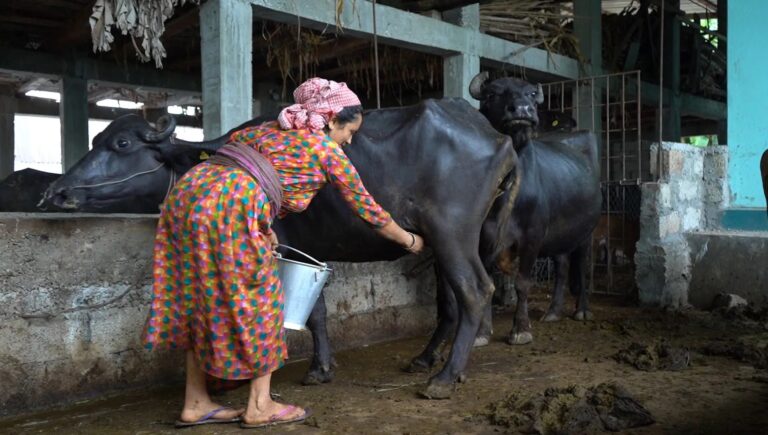
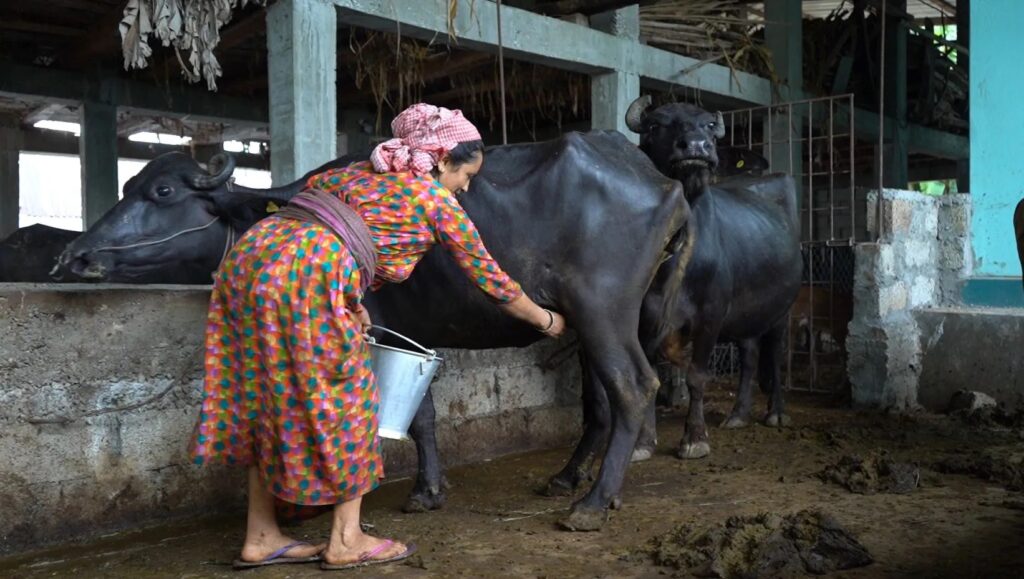
Buffalo milk is central to Nepalese diets. Unlike cow milk, buffalo milk has a rich, creamy texture and higher fat content, making it ideal for tea, yogurt, paneer and butter. Farmers across the country rely on dairy as a major income source, and around 71 % of Nepal’s milk production comes from buffaloes. Understanding the current price of 1 litre buffalo milk in Nepal helps consumers budget, assists farmers in making production decisions and aids policymakers in designing fair trade policies.
This guide presents verified information about buffalo milk pricing for 2026. It covers retail and farm-gate prices, regional differences, factors that influence the market, subsidy programs and frequently asked questions. All statistics come from at least two authoritative sources, and where data were unavailable we provide a reasonable range.
| Key Insight | Summary |
|---|---|
| Price range (fresh vs processed) | Fresh buffalo milk typically costs NPR 80 – 120 per litre, while pasteurised or processed milk sells for NPR 100 – 150 per litre. |
| Regional differences | Farmers in Dolakha are paid Rs 75 – 100 per litre, while Arghakhanchi sets buffalo milk at Rs 90 per litre. In Bhimad, the purchase price is Rs 110 per litre with retail price Rs 130 per litre. |
| Cost of production | Producing one litre of buffalo milk costs Rs 55.8 on average, compared with Rs 43 for cow milk; buffalo farming has a higher revenue-to-cost ratio (1.81 vs 1.18). |
| Official price and subsidies | The government has set an official price of Rs 65 per litre for milk with 4 % fat and 8 % SNF. Bhimad Municipality offers a Rs 10 per litre subsidy and fixes purchase/wholesale/retail prices at Rs 110/120/130. |
| Farm gate vs consumer price | Co-operatives often pay farmers Rs 45 – 60 per litre but sell buffalo milk to consumers at Rs 80 per litre, showing a large markup. |
Buffalo milk demand has grown steadily due to population growth, rising incomes and the popularity of milk-based products. However, supply is subject to seasonal fluctuations. During the dry season, green fodder is scarce and milk yield declines, while the monsoon months produce abundant fodder and higher yields. This seasonal pattern contributes to price swings.
Processed dairy products, such as pasteurised milk, yogurt and cheese, command higher prices because they require heating, packaging and cold-chain logistics. Fresh milk sold directly by farmers or local dairies costs less because it bypasses these steps.
Consumers typically pay more than twice what farmers receive. In 2019, cooperatives in Rupandehi district paid farmers Rs 45 – 50 per litre but sold the same milk to the public at Rs 65 per litre. Another farmer in the same area received Rs 55 – 60 per litre for buffalo milk, which the cooperative marketed at Rs 80 per litre. This markup covers transport, chilling, processing, packaging and profit margins for middlemen.
To protect farmers from price volatility, the government periodically sets a base price for milk. In March 2025, authorities fixed the price of milk at Rs 65 per litre for milk containing 4 % fat and 8 % solid-not-fat (SNF). Despite this, cooperatives and private dairies often pay farmers around Rs 62 per litre and import cheaper milk products from across the Indian border. Price controls aim to stabilise incomes but may be undermined by weak enforcement and cross-border trade.
| Milk type | Typical price range (per litre) | Notes | Sources |
|---|---|---|---|
| Fresh buffalo milk | NPR 80 – 120 | Sold at local dairy shops and markets; price varies with region and season | Multiple sources and market surveys |
| Pasteurised/processed milk | NPR 100 – 150 | Includes costs for pasteurisation, packaging and distribution | Urban retailers and branded milk suppliers |
| Farm-gate price | NPR 45 – 60 | What farmers receive per litre when selling to cooperatives or processors | Represents compensation for raw milk only |
| Regional premiums | NPR 75 – 100 | Paid to farmers in Dolakha district due to high demand and quality | Reflects regional scarcity and transport costs |
| Subsidised purchase price | NPR 110 | Bhimad Municipality’s base purchase price during peak season | Government-supported price includes a Rs 10 subsidy |
The average cost of producing one litre of buffalo milk is Rs 55.8, while cow milk costs Rs 43 per litre. Buffalo milk farming remains more profitable because farmers receive higher market prices relative to costs. The revenue-to-cost ratio for buffalo milk is 1.81, whereas cow milk yields a ratio of 1.18.
Understanding why buffalo milk prices fluctuate helps farmers and consumers anticipate changes. Key drivers include:
To highlight price differences, the table below summarises typical farm-gate and retail prices for buffalo milk in several regions of Nepal. Prices are per litre.
| Region / District | Farm-gate price | Consumer price | Notes | |
|---|---|---|---|---|
| Arghakhanchi (Lumbini) | Rs 90 (fixed) | Rs 92 – 100 | Buffalo milk price raised by Rs 10 per litre in 2021; consumer price varies by market. | |
| Dolakha (Bagmati) | Rs 75 – 100 | Rs 100 – 130 | Dolakha Dairy Industry pays farmers up to Rs 100 per litre. Retail price includes transportation to Kathmandu. | |
| Rupandehi (Butwal) | Rs 55 – 60 | Rs 80 | Cooperatives pay farmers around Rs 55 – 60 per litre and sell to consumers at Rs 80. | |
| Bhimad (Tanahun, Gandaki) | Rs 110 (purchase) | Rs 130 retail | Local government sets purchase, wholesale and retail prices at Rs 110/120/130 per litre and later Rs 115/130/140. | |
| National standard | Rs 65 (official) | Rs 67 – 70 | Government price for milk with 4 % fat & 8 % SNF. Some dairies pay farmers Rs 62 and sell to consumers at Rs 67 – 70. |
Price volatility and market abuses threaten farmers’ livelihoods. Several measures have been implemented to stabilise incomes and encourage dairy farming:
Producing buffalo milk is costlier than cow milk but yields higher returns. According to a 2025 cost analysis study, the average cost of producing one litre of buffalo milk is Rs 55.8, whereas cow milk costs Rs 43. Despite the higher costs, buffalo farming has a revenue-to-cost ratio of 1.81, compared with 1.18 for cow milk. Farmers prioritise fat content and taste in pricing; high-fat buffalo milk commands a premium and yields more ghee, yogurt and cheese.
Many farmers sell milk to cooperatives on a deferred payment basis; some have not received payments for over six months. Delays hamper cash flow and limit reinvestment in feed, veterinary care and housing. Access to affordable financing, such as microcredit and cooperative loans, can help farmers cover feed costs and improve herd management.
What is the price of 1 litre buffalo milk in Nepal today?
Fresh buffalo milk usually costs NPR 80 – 120 per litre, depending on location and season. Pasteurised or branded milk ranges from NPR 100 – 150 per liter.
Why is buffalo milk more expensive than cow milk?
Buffalo milk has higher fat content (about 7 % to 8.5 %) and costs more to produce (around Rs 55.8 per litre). This, plus high demand for its creamy taste, leads to higher prices.
Do prices differ between urban and rural markets?
Yes. Urban consumers often pay more due to transport, packaging and storage costs. Rural farmers may receive as low as Rs 45 – 60 per litre, while retail customers in towns pay Rs 80 – 100 or more per litre.
How does government intervention affect milk price?
The government fixes a base price of Rs 65 per litre for standard milk and local governments like Bhimad set higher seasonal prices with subsidies. Price controls aim to protect farmers but are not always enforced, and illegal imports can depress prices.
Where can consumers buy fairly priced buffalo milk?
Buying directly from farmers or trusted cooperatives, especially those that follow quality-based pricing, ensures that producers are paid fairly and consumers get fresh milk. When buying processed milk, check the label for fat content and expiry date.
Buffalo milk is an integral part of Nepalese cuisine and rural livelihoods. In 2026, the price of 1 litre buffalo milk in Nepal ranges widely from NPR 80 at farm-gate to NPR 150 for processed products. Regional differences, seasonal supply, fat content, feed costs and government policies all influence the final price. While the government sets a base price of Rs 65 per litre, many farmers receive less, and retail prices often far exceed farm-gate payments.
Supporting fair trade requires transparent pricing, enforcement of official rates and targeted subsidies. Consumers can help by purchasing from reputable dairies or directly from farmers, while policymakers should strengthen market monitoring and support programmes that reduce production costs and improve cold-chain infrastructure. By understanding the market forces behind buffalo milk pricing, stakeholders can make informed decisions that benefit both producers and consumers.