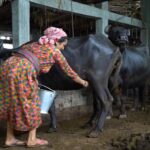
If you are considering investing in a dairy enterprise, the Murrah buffalo stands out as one of the most profitable livestock options. Originating from the Indian state of Haryana, the Murrah is renowned for its high milk yield, rich fat content, and strong genetic traits. Farmers across India—and increasingly in Nepal, Brazil, Egypt and Bangladesh—choose this breed for its adaptability, productivity and the premium price its milk fetches.
This article provides an evidence‑based cost analysis to help you decide if buying a Murrah buffalo is worth the investment. We will examine purchase price ranges, daily milk yield, the cost of feeding and caring for the animal, net returns, government subsidies and loan options. By the end, you will have a clear picture of the return on investment (ROI) offered by these “black gold” animals and the steps necessary to maximize profits.
| Key metric | Data (verifiable) | Notes |
|---|---|---|
| Average purchase price | ₹60,000–90,000 for young females; ₹90,000–1,30,000 for buffaloes producing 8–12 litres/day; ₹1,40,000–2,50,000+ for high‑yielders (15–20 litres/day); Murrah breeding bulls ₹1,50,000–5,00,000+ | Prices vary by milk yield, age and region; Haryana and Punjab animals cost more |
| Milk yield | 10–16 litres/day under normal management; 18–25 litres/day with excellent management | High fat content (7%–8.5%) enables higher milk prices |
| Cost of milk production | Annual cost per buffalo: ₹90,864; net income per buffalo: ₹22,227 | Break‑even point of 953.93 kg/year (45.38% of total milk production) |
| Daily cost and returns | Total costs: ₹180.16 per day per milch buffalo; net return: ₹6.42 per litre of milk | Based on a study of 420 farmers in Punjab (2019) |
| Net income improvement from superior genetics | Adopting superior Murrah germplasm increases net income by ~$405 (≈₹33,700) per buffalo per year | Improved genetics boost milk yield and reduce AI costs |
The first consideration is how much you will pay. The price of a Murrah buffalo varies widely based on milk yield, age, health and pedigree:
Buffaloes from Haryana and Punjab often command higher prices due to superior genetics. These states have long‑established breeding programs and export animals to other parts of India and beyond. When buying, assess the animal’s pedigree, health and milk yield records rather than just the price tag. Avoid extremely cheap offers which may indicate poor genetics or health issues.
A premium Murrah buffalo costing ₹2,00,000 and producing 15 litres of milk per day could recover its purchase price within 8–12 months if milk sells for ₹120 per litre (a typical farm gate price in urban markets). Lower‑priced animals may take longer to break even. This rapid payback is one reason investors prefer Murrah buffaloes over local breeds.
Murrah buffaloes are known for their high milk yield and rich fat content, which translates to higher income per litre. Under normal management, a Murrah buffalo produces 10–16 litres of milk per day. With excellent feeding and care, yields can reach 18–25 litres. The milk contains 7%–8.5% fat, making it ideal for ghee, butter, paneer and other dairy products.
Comparing to indigenous buffaloes, Murrah yields are higher. Indigenous animals typically produce around 6.13 kg/day, so investing in Murrah can nearly double milk output. High fat content also means farmers may receive premium prices from cooperatives or local buyers, especially if supplying milk for value‑added products.
To estimate income, multiply daily milk yield by the selling price. If milk is sold at ₹110 per litre, a 12‑litre buffalo generates ₹1,320 per day. This amounts to roughly ₹40,000 per month. After deducting feed, labour and veterinary costs (discussed below), the net income remains attractive. Farms producing value‑added products such as ghee, paneer or yoghurt can earn even more.
Murrah bulls and male calves also have market value. Male calves may be sold at 6–12 months for meat or for draft purposes. Bulls with proven genetics can sell for ₹1.5–5 lakh. In many rural areas, the dung produced by buffaloes is used as manure or sold as organic fertiliser, generating additional income.
Understanding the cost of keeping a Murrah buffalo is crucial for profit planning. Two studies provide useful benchmarks:
Based on these studies, the main cost components include:
Using the Haryana data (net income ₹22,227 per year per buffalo) and assuming milk yields of 10–12 litres per day, farmers earn about ₹60–70 per litre after deducting costs. This matches the Punjab figure of ₹6.42 per litre net return. Improving genetics further boosts income. When farmers adopt superior Murrah germplasm through field progeny testing, annual net income increases by $405 per buffalo (≈₹33,700). This improvement comes from higher milk yield and lower AI costs.
The table below summarises typical income and costs for a 12‑litre buffalo.
| Item | Value |
|---|---|
| Milk yield (12 L/day) | 12 L × 365 = 4,380 L/year |
| Milk price (₹110/L) | ₹4,380 L × 110 = ₹4,81,800/year |
| Annual cost of production | ₹90,864 |
| Net income before genetics improvement | ₹4,81,800 – ₹90,864 ≈ ₹3,90,936 |
| Net income per litre | ₹3,90,936 / 4,380 L ≈ ₹89 per litre |
| Additional income with superior genetics | ≈ ₹33,700 |
This simplified calculation does not account for all variables but illustrates that Murrah buffaloes can yield high net income when well managed.
Genetics is a major determinant of milk production, reproductive efficiency and adaptability. Indigenous buffaloes in India yield about 6.13 kg of milk per day, whereas Murrah buffaloes can yield 10–16 L daily. The Murrah breed has superior feed conversion efficiency, meaning it produces more milk from the same amount of feed. This reduces per‑litre costs and environmental impact.
A causal impact study in Haryana compared farmers who adopted superior Murrah genetics through field progeny testing with those who used ordinary stock. The treatment group earned an annual net income of $773.97 per buffalo compared with $368.03 for the control group. The difference—$405.94 per buffalo (about ₹33,700)—represents the payoff from using superior germplasm. It resulted from higher daily milk yield (1.53 kg more per day) and lower artificial insemination costs. Such results highlight how investing in quality breeding pays back over multiple lactations.
India and Nepal have breeding programs that supply Murrah germplasm. In India, the Central Institute for Research on Buffaloes (CIRB) and state breeding farms provide high‑yield bulls and frozen semen. In Nepal, the National Livestock Breeding Office (NLBO) has centres in Pokhara, Nepalgunj and Lahan that house pure Murrah bulls imported from India. Farmers can purchase semen or hire bulls for natural service through these centres. Adopting improved genetics raises productivity and reduces average cost per AI.
While Murrah buffalo farming is profitable, several factors influence ROI:
Murrah buffalo farming also faces challenges:
What is the price of a Murrah buffalo in 2026? Prices range from ₹60,000 to more than ₹2,50,000 depending on milk yield, age and pedigree. A high‑yield Murrah may cost ₹1.4–2.5 lakh or more.
How much milk does a Murrah buffalo produce per day? Under typical farm conditions, a Murrah buffalo yields 10–16 L of milk daily; with excellent feeding and care, yields can reach 18–25 L.
What are the production costs of a Murrah buffalo? Annual costs are around ₹90,864 per buffalo with net income of ₹22,227. Daily costs are about ₹180.16 with net returns of ₹6.42 per litre.
How long does it take to recover the cost of a Murrah buffalo? A high‑yield buffalo costing ₹2–2.5 lakh can recover its purchase cost within 8–12 months through milk sales. Lower‑price animals may take 12–18 months.
Why are Murrah buffaloes more profitable than local breeds? Murrah buffaloes produce more milk and higher fat than indigenous breeds. Adopting superior Murrah genetics increases annual net income by about $405 (≈₹33,700) per buffalo.
Murrah buffaloes offer a compelling return on investment for farmers and entrepreneurs. Although purchase prices are high, the breed’s superior milk yield, rich fat content and adaptability translate into strong cash flows and quick payback periods. Studies in Haryana and Punjab show that annual production costs are manageable and net income per litre of milk remains positive. Investing in superior genetics further boosts profits, adding about ₹33,700 per animal per year.
Success in Murrah buffalo farming depends on choosing high‑quality animals, providing balanced nutrition, maintaining strict health protocols and practising efficient breeding management. Government subsidies on livestock insurance and low‑interest loans reduce risk and encourage adoption. With proper planning, Murrah buffaloes can transform small dairy farms into profitable enterprises, offering sustainable livelihoods and contributing to food security.