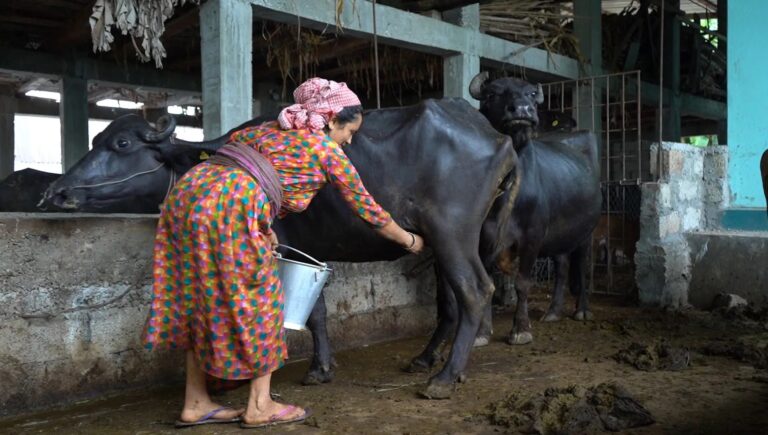
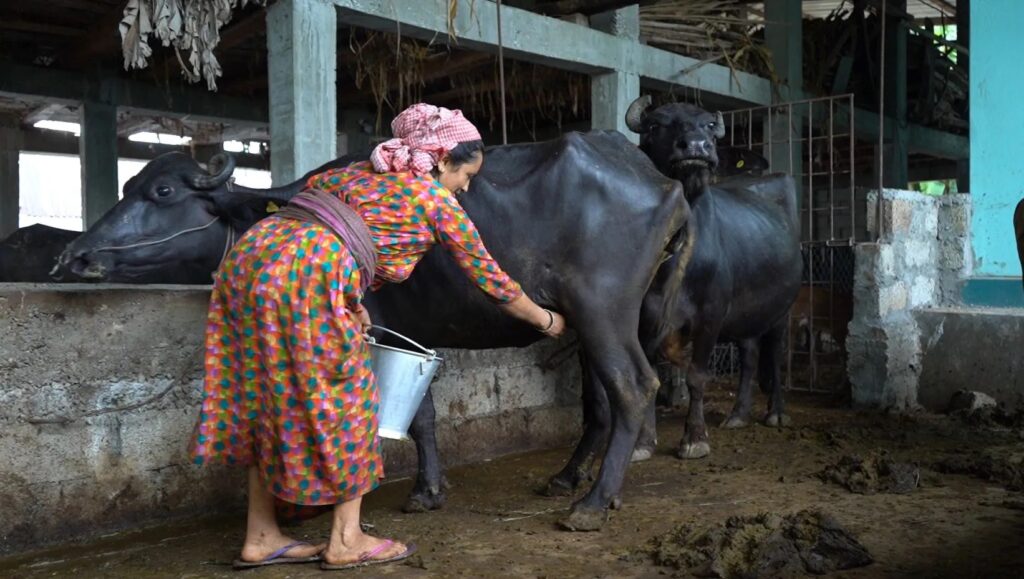
Buffalo meat is Nepal’s most widely consumed red meat and plays a central role in festivals, everyday meals and livelihoods across the country. Understanding its price dynamics requires a deep dive into supply chains, consumption patterns, climatic challenges and market practices. This evidence‑based blog investigates why daily buffalo meat prices fluctuate, highlights current price ranges and explores the wider context of sustainable Himalayan agriculture.
| Key Fact | Evidence |
|---|---|
| Current buffalo meat price range | Multiple sources show that buffalo meat is generally priced at NPR 500–600 per kg in Kathmandu and other regions. The National Meat Entrepreneurs Association (NMEA) sets the standard price around NPR 500/kg, but retailers sell at NPR 500–600/kg depending on quality. E‑commerce sites list fresh buff meat at NPR 550/kg |
| Historical price rise | In 2010, buffalo meat cost NPR 190–220/kg |
| Buffalo meat share in Nepal’s meat production | Buffalo meat accounts for 27 % of Nepal’s total meat output and provides 20.23 g of protein per 100 g. |
| Supply decline | National meat production declined as people migrated and herders sold animals. Buffalo meat production decreased by 33.01 % (from 173,906 t to 116,503 t) over several years. Reduced supply contributes to price volatility. |
| NMEA price fixing | During festivals like Dashain, the National Meat Entrepreneurs Association and traders fix buffalo meat at NPR 500/kg to maintain uniform pricing. However, traders sometimes form syndicates and raise prices when demand surges. |
Buffalo meat—known colloquially as “buff”—is more than food in Nepal. It is central to Nepali cuisine, ceremonial feasts and livelihoods. From spicy buff momos sold by street vendors to ritual offerings during Dashain and Tihar, buffalo meat consumption spans socio‑economic classes. According to the Food and Agriculture Organisation, buffalo meat supply contributes 27 % of Nepal’s total meat output and contains high protein (20.23 g per 100 g). Despite this importance, prices fluctuate daily, leaving consumers and small businesses uncertain. This article explores current price ranges, factors driving fluctuations and the broader link between buffalo meat markets and sustainable agriculture in the Himalayas.
Recent market data show that one kilogram of buffalo meat in Nepal typically sells for NPR 500–600. The National Meat Entrepreneurs Association (NMEA) sets a base price of NPR 500/kg, reflecting standard market conditions. Retailers charge within this range depending on meat quality, cut and location. For example, the Kathmandu‑based site BuyTarkari lists fresh buff meat at NPR 550/kg and buff keema at NPR 600/kgbuytarkari.com. Another online market lists buff at NPR 550/kg
sewapoint.com. During festivals, traders maintain the NMEA price, but limited supply or higher quality cuts (boneless or cold‑store) can fetch NPR 600–650/kg.
A historical comparison illustrates how buffalo meat prices have evolved:
| Year | Price (per kg) | Context |
|---|---|---|
| 2010 | NPR 190–220 | Prices were relatively low; supply was stable |
| 2020 | NPR 400 → 500 | The price rose from NPR 400 to 500 due to rising demand and falling supply during the COVID‑19 lockdown. Traders formed syndicates and the government lacked effective monitoring. |
| 2021–2022 | NPR 500 | NMEA fixed buffalo meat at NPR 500/kg during Dashain to ensure uniform pricing. |
| 2024–2026 | NPR 500–600 | E‑commerce and cold stores list fresh buff meat around NPR 550/kg |
The table shows a steady upward trajectory. Price increases correspond to supply shocks, festival demand and economic factors like inflation and feed costs.
Most Nepali households purchase more meat during festivals such as Dashain, Tihar, Maghe Sankranti and wedding seasons. Demand surges can cause temporary shortages. For example, traders fixed buffalo meat at NPR 500/kg to maintain uniform pricing during Dashain. If supply cannot keep up, retailers may charge more for premium cuts. During major festivals, families may also prefer boneless or mince cuts for special dishes, further pushing prices toward the upper range. Because demand fluctuates day‑to‑day during festival weeks, supply/demand imbalances result in daily price swings.
Supply constraints are a major driver of price volatility:
Feed costs constitute a significant share of meat production expenses. Increases in grain prices, fodder, transportation (fuel), electricity and labour directly affect the cost of rearing buffalo. During the COVID‑19 pandemic, feed imports were disrupted, raising production costs. Farmers facing higher costs reduce their herd sizes, which further tightens supply. Meanwhile, if retailers maintain high margins, farmgate prices may not cover producers’ costs, causing them to exit the market. In remote Himalayan areas, transport costs are particularly high due to poor roads; price variation can be substantial between valley cities and hill districts.
Price fluctuations also relate to market governance:
Climate change affects feed availability and animal health. Droughts or erratic rainfall reduce green fodder and water, leading to lower weight gain and milk yield. Disease outbreaks—such as foot‑and‑mouth disease, lumpy skin disease or brucellosis—can kill buffalo or reduce productivity, causing supply dips. Farmers often sell animals quickly during outbreaks, leading to short‑term supply increases followed by shortages.
Urbanisation influences meat consumption patterns. Cities like Kathmandu, Pokhara and Biratnagar have rising middle‑class populations that demand quality meat cuts and processed products (sausages, keema, boneless). This demand drives premium prices. Rural areas may consume lower‑grade meat at cheaper rates. E‑commerce platforms (e.g., BuyTarkari, Sewapoint) enable direct ordering, but prices vary due to delivery fees and packagingbuytarkari.com.
Although buffalo meat is produced domestically, feed and animal husbandry inputs (supplementary feed, vaccines, equipment) are often imported. When the Nepali rupee depreciates against the Indian rupee or US dollar, input costs rise. Fuel price hikes raise transportation costs, pushing up retail prices. Conversely, stable or stronger currency may ease cost pressures.
Sustainable agriculture in the Himalayas aims to balance food production, environmental conservation and socio‑economic wellbeing. Buffalo meat production intersects with this goal in several ways:
| Category | Specific factors | Impact on price |
|---|---|---|
| Demand | Festival demand (Dashain, Tihar), weddings, urban middle class appetite | Sudden increases raise daily prices. |
| Supply | Declining buffalo population, export ambitions to China, disease outbreaks, migration of herders | Limited supply pushes prices upward; oversupply during herd liquidation can cause short dips. |
| Production costs | Feed prices, fodder availability, transportation, labour wages, fuel prices | Higher costs pass through to retail prices. |
| Regulation and syndicates | NMEA price fixing, trader collusion, weak market monitoring | Artificially stable or inflated prices; limited transparency. |
| External factors | Currency fluctuations, import of feed/vaccines, climate change, road blockades | Exchange rate and logistic disruptions increase costs. |
| Consumer behaviour | Preference for boneless/meat cuts, e‑commerce convenience, health awareness | Influences demand for specific products; premium cuts fetch higher prices. |
Production and retail margins are critical to understanding price behaviour. While official data on cost structures are limited, qualitative insights are available:
Q1: How much is 1 kg of buffalo meat in Nepal today?
A: As of April 2026, buffalo meat typically costs NPR 500–600/kg in urban markets. The NMEA sets the base price at NPR 500/kg, but retailers sell within this range. Online platforms list fresh buff meat at NPR 550/kgbuytarkari.com.
Q2: Why does buffalo meat price fluctuate daily?
A: Prices change due to festival demand, supply shortages (declining herds), feed and transportation costs, trader syndicates and regulatory gaps. Road blockades and climate events can also disrupt supply.
Q3: Is buffalo meat cheaper than goat meat?
A: Generally yes. During festivals, goat meat costs NPR 1,000–1,300/kg, while buffalo meat is fixed at NPR 500/kg. However, premium buffalo cuts can be more expensive than regular goat meat.
Q4: Does Nepal import buffalo meat?
A: Nepal does not import large quantities of buffalo meat, but it imports inputs like feed and vaccines. Conversely, the country plans to export buffalo meat to China (5,000 t/day from 2026), which may reduce domestic supply if not managed carefully.
Q5: How can consumers ensure fair prices?
A: Buying from co‑operative outlets or platforms that publish transparent pricing can help. Consumers can compare prices across markets and avoid price gougers. Advocacy for stronger market regulation and support for small producers also helps ensure fair prices.
Buffalo meat plays a vital role in Nepali diets and the national economy. Prices have risen steadily over the past decade from NPR 190–220/kg in 2010myrepublica.nagariknetwork.com to NPR 500–600/kg in 2026. Daily fluctuations stem from festival demand, supply constraints, rising production costs, trader behaviour, climate impacts and weak regulation. Understanding these factors allows consumers to make informed choices and policymakers to design interventions. Sustainable agriculture in the Himalayas must integrate livestock with crop production, invest in cold chains and feed innovation, and empower farmers through co‑operatives and digital platforms. Balancing tradition and technology will help stabilise meat prices while conserving the mountain environment.