
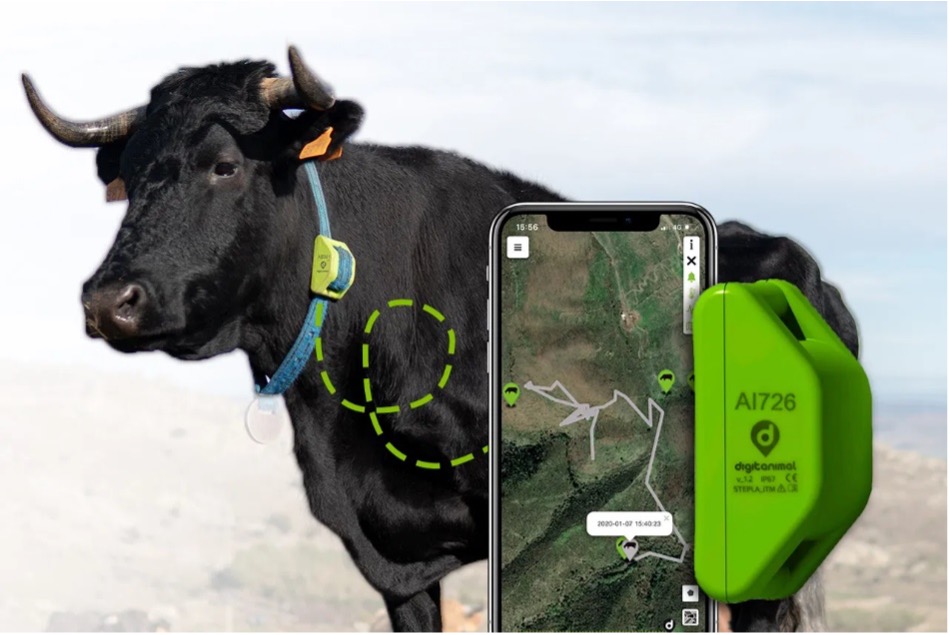
Modern livestock farming is undergoing a digital transformation. Technologies like Radio Frequency Identification (RFID) ear tags, Electronic Identification (EID) tags and smart collars give farmers unprecedented visibility into their herds. Passive RFID tags store a unique animal ID, making traceability easier and reducing paperwork. Smart collars build on this by integrating multiple sensors accelerometers, GPS and microphones that monitor behavior and health in real time. These tools support precision livestock farming, improve animal welfare and can boost productivity.
In Nepal, the dairy sector is rapidly evolving. Government breeding programs have introduced high‑yield Murrah bulls and implemented artificial insemination, raising milk yields from around 700–800 litres to over 2 700 litres per lactation. As the industry seeks greater efficiency and sustainability, wearable technologies offer another leap forward. This article explores the market landscape, pricing, influencing factors and regional context for RFID tags and smart collars, with a focus on Nepalese agriculture.
| Key Point | Insight |
|---|---|
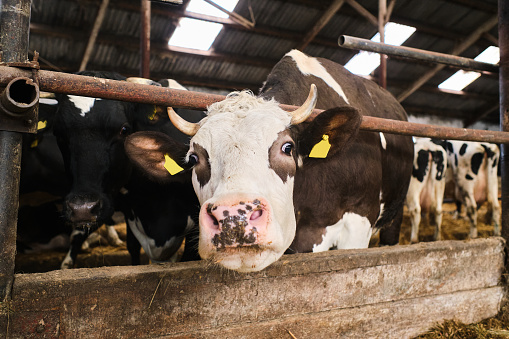
| Low‑frequency RFID tags | Livestock RFID tags operate at 134.2 kHz and carry a 15‑digit Animal Identification Number (AIN). They transmit a unique code when scanned but do not store additional data. |
| Sensor‑rich smart collars | Wearable collars integrate sensors such as accelerometers, GPS receivers, microphones and magnetometers to monitor behavior, health and environmental interactions. They provide real‑time insights into cow health, rumination and location. |
| Virtual fencing systems | A virtual fence consists of software to define digital boundaries, GPS‑enabled collars that emit audio/electrical cues, and communication via base stations or cellular networks. Four commercial systems (eShepherd™, Halter™, Nofence™ and Vence™) were available in the U.S. as of December 2025. |
| Breed improvement in Nepal | The National Livestock Breeding Office (NLBO) in Pokhara supplies millions of doses of semen each year and has improved buffalo milk production from 700–800 L per lactation to about 2 700–2 800 L after breed improvement. The office collects and sells semen, generating significant revenue. |
| Research infrastructure | The Regional Agricultural Research Station (RARS) in Tarahara was established as Birat Krishi Farm in 1960 and conducts research on crops and livestock. Its Animal Science and Forage Research Program focuses on pigs, poultry and forage crops. |
Electronic identification and wearable sensor markets have grown quickly. The EID tag market was valued at roughly US$1.2 billion in 2024 and is projected to reach US$2.8 billion by 2033, expanding at a compound annual growth rate (CAGR) of 10.3 %. EID tags allow rapid and accurate identification of each animal: the tag stores a unique number and is read by a handheld or fixed RFID reader. When combined with herd management software, they provide full visibility into each cow’s health, breeding and movement.
Smart collars represent a more sophisticated segment. They incorporate sensors and wireless connectivity to monitor rumination, activity and location. In a case study reported by eDairy News, a start‑up developed smart collars priced at around US$150 per unit that collect continuous data on movement and rumination. These collars offer highly accurate estrus detection and early illness warning—benefits that improve reproductive efficiency and reduce veterinary costs. Virtual fencing systems go further by using GPS‑enabled collars and software to create digital boundaries; as of December 2025, four commercial systems (eShepherd™, Halter™, Nofence™ and Vence™) were available in the U.S..
Livestock remains a major component of Nepal’s economy, providing full‑ or part‑time employment for around 60 % of the population and contributing about 12 % of Gross Domestic Product. The National Livestock Breeding Office (NLBO) in Pokhara serves as a resource centre for superior genetic materials and runs artificial insemination programs nationwide. In 2023 the office distributed roughly 600 000 doses of semen from Pokhara, 300 000 doses from Lahan and 50 000 doses from Nealgunj, earning approximately Rs 39.6 million in revenue. Milk yields have risen dramatically, with improved Murrah buffalo producing 2 700–2 800 L per lactation compared with 700–800 L before breed improvement.
Wearable technologies are still nascent in Nepal. Most farmers rely on traditional tags and manual record‑keeping. Yet with growing herd sizes and greater emphasis on traceability and disease control, interest in RFID and smart collars is rising. Importers offer RFID ear tags and smart collars via online marketplaces, while research organisations are exploring local adaptation. The Regional Agricultural Research Station (RARS) in Tarahara, established in 1960 as Birat Krishi Farm, conducts research on crops and livestock and could serve as a test bed for these technologies. Major dairy cooperatives and progressive farmers in Bagmati, Lumbini and Gandaki provinces are gradually adopting electronic ear tags for better record‑keeping.
| Device type | Estimated price (NPR) | Approx. price (USD) | Notes |
|---|---|---|---|
| RFID/EID ear tag | Current data unavailable. Market estimates suggest NPR 300–500 per tag (≈ US$2–4) | US$2–4 | Low‑frequency tags operating at 134.2 kHz carry a 15‑digit ID; they require a reader and herd management software. |
| Smart collar (health & estrus monitoring) | NPR 20 000–25 000 per unit | US$150–190 | Example: a start‑up’s smart collar monitors rumination, movement and location, providing early disease detection and estrus alerts. |
| Virtual fencing collar | Current data unavailable. Estimated NPR 60 000–80 000 per unit (≈ US$450–600) | US$450–600 | Virtual fencing systems combine GPS collars with software and sometimes base stations; four commercial systems were available in the U.S. by Dec 2025. |
| RFID reader (handheld) | NPR 20 000–40 000 | US$150–300 | A reader scans the tag’s ID and transfers data to a computer or mobile app. Prices vary by brand and features (Bluetooth, connectivity). |
| Herd management software subscription | NPR 5 000–15 000 per year | US$40–120 | Software stores and analyses animal records; some plans charge per cow or per user. |
Conversion estimated at US$1 ≈ NPR 134 (April 2026). Where current price data is unavailable, market estimates are provided.
Several elements influence the cost of RFID tags and smart collars:
| Region/Facility | Key activities | Notes |
|---|---|---|
| NLBO Pokhara (Gandaki Province) | Produces and distributes frozen semen; maintains a herd of Murrah and crossbred bulls; improves buffalo and cattle genetics through artificial insemination. Milk yield after breed improvement reached 2 700–2 800 L per lactation. | Also operates bull mother farms and collects around 600 000 doses of semen annually. |
| NLBO Lahan (Madhesh Province) | Handles regional artificial insemination and distributes around 300 000 semen doses per year. | Supports crossbreeding and training programs. |
| NLBO Nepalgunj (Lumbini Province) | Collects and distributes about 50 000 semen doses per year. | Smaller facility focusing on buffalo and goat breeding. |
| NLBO Bull Mother Farm (Pokhara) | Breeds high‑merit females to supply superior genetic material for AI programs. | Helps sustain genetic improvement. |
| Regional Agricultural Research Station (RARS) Tarahara (Koshi Province) | Conducts research on crops and livestock; Animal Science and Forage Research Program focuses on pigs, poultry and forage crops. | Established in 1960 as Birat Krishi Farm; may support trials for wearable tech. |
| Private dairy farms in Bagmati, Gandaki and Lumbini | Some large cooperatives have begun testing EID tags for herd management, focusing on traceability and disease control. | Adoption is still limited and primarily among commercial farms. |
The Government of Nepal emphasises breed improvement and artificial insemination rather than wearable technologies. Key programs include:
There is currently no dedicated subsidy for RFID tags or smart collars. However, farmers can access general agriculture grants and subsidies for dairy infrastructure, such as the Agriculture and Livestock Development Bank’s concessional loans. Future policies may incorporate wearable tech as traceability becomes mandatory.
Investing in wearable technology can be costly for small farmers. Financing avenues include:
Q1: What is an RFID ear tag?
A: An RFID (radio‑frequency identification) tag is a small electronic device inserted in an animal’s ear. It holds a unique 15‑digit identification number and uses low‑frequency radio waves to transmit the code when read. The tag itself does not store additional data.
Q2: How do smart collars help detect estrus?
A: Smart collars monitor movement and rumination patterns. Changes in activity and rumination can indicate the onset of estrus. Algorithms analyse these signals and alert farmers, leading to more accurate breeding and improved conception rates.
Q3: Can smart collars be used on buffaloes?
A: Yes. Wearable technology is not species‑specific. However, collars should be sized appropriately, and heavier models may be unsuitable for smaller breeds. Field trials are necessary to validate performance on buffaloes.
Q4: Do RFID tags replace record‑keeping?
A: No. RFID tags transmit only the unique ID. Farmers must still record and update animal data manually or via herd management software. The technology simplifies data entry but does not eliminate it.
Q5: What maintenance do smart collars require?
A: Collars should be checked regularly for fit especially on growing animals and cleaned to prevent skin irritation. Batteries or solar units must be charged or replaced as recommended by the manufacturer. Ensuring proper collar fit is essential for animal welfare.
Wearable technologies are reshaping cattle management. RFID and EID ear tags provide secure identification and traceability, forming the foundation for data‑driven herd management. Smart collars build on this by tracking movement, rumination and location, enabling early disease detection and precise breeding. Virtual fencing offers a glimpse of the future, using GPS collars and digital boundaries to guide livestock without physical fences.
In Nepal, the focus remains on breed improvement and artificial insemination. Programmes run by NLBO have already increased milk yields dramatically. As the dairy sector modernizes and market pressures grow, adoption of wearable tech will likely accelerate. Farmers who invest in RFID tags and smart collars can gain better control over their herds, improve welfare, meet traceability requirements and increase profitability. For those considering this step, understanding the market, pricing and available support outlined in this guide can help make informed decisions.