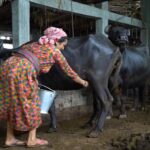
Ranga, the male buffalo in Nepal, is more than just a livestock animal. It plays a major role in farming, ecosystem balance, and rural livelihoods. Even today, many farmers depend on ranga for daily agricultural work and income.
| Key Point | Insight |
|---|---|
| Core Farm Power | Provides essential draft power in hilly regions where tractors cannot reach. |
| Soil Enrichment | Dung acts as natural fertilizer, creating high quality organic compost. |
| Genetic Strength | Quality males are crucial for healthy Murrah and local crossbreeding. |
| Weed Control | Natural grazing patterns prevent invasive plant overgrowth. |
| Economic Security | Acts as a living savings account for smallholder farm families. |
Farming systems depend heavily on the balance between crops, land, and livestock. At the heart of this balance is the ranga nepali animal, the male buffalo. Many people overlook its importance. However, this animal acts as the quiet backbone of rural agriculture.
Smallholder farming relies on these strong animals for plowing fields and pulling heavy loads. Beyond physical labor, they shape the natural landscape. They restore soil quality. They also support the genetic health of entire dairy herds. This guide explores the diverse roles these animals play in natural and agricultural ecosystems.
Livestock agriculture in the Himalayas is shifting. Farmers increasingly look toward modernization. Because of this, the population of working male buffaloes faces decline. Despite this trend, traditional farming communities recognize their enduring value. Current data is unavailable. Market estimates suggest a range of adaptations where small farms blend modern tools with traditional animal power.
The government continues to manage breeding offices and research stations. Facilities like those in Pokhara and Tarahara study ways to improve local herds. They focus on pure Murrah and local crossbreeds. Understanding the ecological role of these animals helps shape better agricultural policies.
In the Terai plains, farmers might easily use tractors. The hilly terrain presents a different story. Steep slopes make machines dangerous and impractical. Therefore, farmers rely entirely on the ranga.
These animals plow terraced fields safely. They pull carts loaded with harvest through muddy pathways. Their hooves gently churn the topsoil without compacting it too deeply. This prevents severe soil erosion on steep mountain sides. Their steady pace allows farmers to manage complex agricultural plots effectively.
Animals do more than pull plows. They give back to the earth directly. The ranga nepali animal consumes rough forage, agricultural waste, and tough grasses. Its digestive system breaks down these complex fibers. The resulting dung is incredibly rich in nitrogen and essential microbes.
Farmers collect this dung to create organic compost. When applied to the fields, it boosts soil fertility naturally. It improves moisture retention. In addition, grazing helps control aggressive weed species. By keeping overgrown vegetation in check, these animals prevent wildfires in dry seasons. They maintain a healthy balance in local plant communities.
A healthy herd requires strong genetics. The male buffalo is essential for maintaining breed quality. High quality males are selected carefully for breeding programs.
Local breeds like Lime and Parkote are well adapted to the cold climate and rough terrain. However, farmers often crossbreed them with pure Murrah stock. This increases overall herd immunity and milk production in females. Good genetics prevent dangerous inbreeding. A single strong ranga can secure the livelihood of an entire farming village by producing resilient offspring.
Smallholder farmers view livestock as walking banks. A healthy animal provides immediate farm labor and holds high financial value. During difficult harvest years, it serves as an emergency financial asset.
Culturally, these animals hold deep significance. Many local festivals and traditional rituals honor their contribution to the harvest. Communities celebrate their strength and resilience. They represent hard work, agricultural success, and rural heritage.
The role of the ranga faces several modern threats. First, the expansion of rural road networks brings cheap mechanical tillers. Many young farmers prefer machines over managing livestock.
Second, the cost of quality feed is rising. Maintaining a large male animal year round requires significant resources. Urban migration leaves fewer hands to care for large livestock. Consequently, many prime breeding males are sold off too early. This creates a shortage of quality genetics in remote villages.
There is great potential for integrating animal power with sustainable agriculture. Organic farming is growing in popularity globally. Organic certification requires natural fertilizers, putting buffalo dung in high demand.
Research stations can further improve breeding networks. By distributing high quality Murrah genetics to rural outposts, the government can boost farm incomes. Eco tourism farms also showcase traditional plowing methods to visitors. These new avenues provide financial reasons to preserve the ranga nepali animal population.
| Feature | Ranga | Modern Tractor |
|---|---|---|
| Terrain Suitability | Excellent for steep hills and mud | Best for flat plains |
| Soil Impact | Light footprint with natural churning | Can cause heavy soil compaction |
| Fuel Source | Grass, farm waste, fodder | Expensive imported diesel |
| Byproducts | Rich organic manure | Exhaust emissions |
| Upfront Cost | Low to moderate | Very high |
Ranga is only used for meat
This is not true because it actively supports farming, soil enrichment, and crucial breeding programs.
Machines have fully replaced buffalo
This is not true in many rural areas. Steep hills and narrow terraces still require animal draft power.
They destroy local vegetation
This is not true when managed well. Controlled grazing actually prevents weed overgrowth and stimulates healthy grass renewal.
What is a ranga in farming?
A ranga is a male buffalo used for draft power, breeding, and organic manure production.
Why is the ranga important for the ecosystem?
They graze to manage weeds and their dung enriches the soil with vital nutrients.
Which buffalo breeds are common in Nepal?
Common local breeds include Parkote and Lime. The improved Murrah breed is also highly valued.
Can machines fully replace the ranga?
No. In steep hilly regions and smallholder farms, tractors cannot operate safely.
How does breeding impact the buffalo population?
Strong male buffaloes ensure the genetic health and resilience of the local herd.
The ranga nepali animal remains a vital part of the agricultural ecosystem. From plowing steep Himalayan terraces to providing organic fertilizer, its contributions are irreplaceable. While modern machinery has its place, the ecological balance provided by traditional animal farming must be preserved. Protecting strong genetics and supporting smallholder farmers will ensure these remarkable animals continue to sustain rural ecosystems for generations to come.